What should you suspect if the general bacteria exceed the standard? This will explain the composition and meaning of the numbers, the causes from the perspective of chlorine and well management, and the flow of re-testing and disinfection.
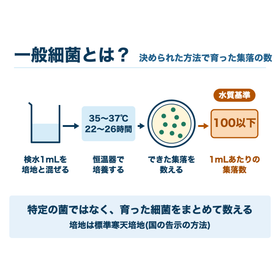
General bacteria are one of the items defined in the water quality standards for tap water. It refers to the number of bacteria that form colonies when cultured using a specified method. The standard is "the number of colonies formed in 1 mL of the sample should be 100 or less." This is not the name of a specific bacterium, but rather a value that counts the bacteria that have grown under the specified conditions.
■ How is it counted?
1 mL of the sample is mixed with standard agar medium and solidified, then cultured in an incubator maintained at 35-37°C for 22-26 hours. After that, the number of colonies formed is counted. This procedure is the testing method defined by national regulations.
■ Are all bacteria in the water counted?
Not all of them. General bacteria, due to these culturing conditions, only detect a portion of heterotrophic bacteria that grow by utilizing organic matter. Heterotrophic bacteria are diverse bacteria that require organic matter for growth.
■ Why are they cultured at a temperature close to body temperature?
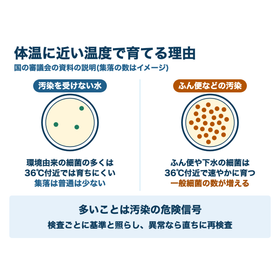
Bacteria found in feces and sewage grow rapidly around 36°C, while many environmental bacteria have a tendency to grow poorly. Therefore, in areas contaminated with feces, the number of general bacteria increases. Please feel free to consult us first.